




Home Destinations Lodging Skiing Sightseeing Activities Camping Books & Maps Gear


Make A Selection

  Visit Official Website
Go Back a Page


Grand Teton National Park

Slideshow image

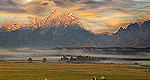
Located in northwestern Wyoming, Grand Teton National Park preserves a spectacular landscape rich with majestic mountains, pristine lakes and extraordinary wildlife. The abrupt vertical rise of the jagged Teton Range contrasts with the horizontal sage-covered valley and glacial lakes at their base, creating world-renowned scenery that attracts nearly four million visitors per year.


 The Basics


Hours:

RANGER STATIONS

Jenny Lake Ranger Station
Open from late May to late September, call for hours
Phone: (307) 739-3343
Closed in winter.
Features in-depth information for visitors planning to climb and backpack in the park.

VISITOR CENTERS

Colter Bay Visitor Center & Indian Arts Museum
May 12 to June 3: 8:00 a.m. - 5:00 p.m.
June 4 to early September: 8:00 a.m. - 7:00 p.m.
Early September to early October: 8:00 a.m. - 5:00 p.m.
Phone: (307) 739-3594
Located 25 miles north of Moose, adjacent to Jackson Lake.
Closes for season October 9.

Flagg Ranch Information Station
June 4 to September 3: 9:00 a.m. - 4:00 p.m., closed for lunch.
Phone: (307) 543-2327
Located about 2.5 miles south of Yellowstone National Park's south boundary and 40 miles north of Moose.
Closes for season Sept 4

Jenny Lake Visitor Center
May 13 to June 3: 8 a.m. to 4:30 p.m.
June 4 to September 3: 8 a.m. to 7 p.m.
September 4 to September 28: 8 a.m. to 4:30 p.m.
Located 8 miles north of Moose at South Jenny Lake.
Closed October through May.

Moose Visitor Center
Open Year-round: 8:00 a.m. - 5:00 p.m. (closes at 7:00 p.m. during peak summer season: June 4 - Sept 3.)
Phone: (307) 739-3399
Located 12 miles north of Jackson.
Closed December 25

Address: PO Drawer 170
Moose, WY 83012
Phone: 307-739-3300
Phone: 307-739-3682
Fax: 307-739-3438

For more info, visit OFFICIAL WEBSITE


 Map

Grand Teton National Park, Wyoming Map


 Directions

From Salt Lake City, Utah (approximately 275 miles/5-6 hours)
Take I-15 to Idaho Falls, then take Highway 26 to Swan Valley. Drive Highway 31 over Pine Creek Pass to Victor, then take Highway 22 over Teton Pass, through Wilson to Jackson. If you would like to avoid the 10% grade of Teton Pass, take Highway 26 from Idaho Falls to Swan Valley. Continue on Highway 26 to Alpine Junction. Take Highway 26/89 to Hoback Junction, then Highway 26/89/191 to Jackson.

or

Take I-80 to Evanston, then Highway 89/16 to Woodruff, Randolph, and Sage Creek Junction. Take Highway 30/89 to Cokeville and then Border. Continue on Highway 89 to Afton, and then to Alpine Junction. Take Highway 26/89 to Hoback Junction, then Highway 26/89/191 to Jackson.

From Denver, Colorado (approximately 550 miles/9-10 hours)
Take I-25N to Cheyenne, then take I-80W through Laramie to Rock Springs. Drive Highway 191 North through Pinedale, then Highway 191/189 to Hoback Junction. Take Highway 191 to Jackson.

or

Take I-25N to Fort Collins, and Highway 287 North to Laramie. Take I-80W to Rawlins, then Highway 287 to Muddy Gap Junction. Continue on Highway 287 to Jeffrey City, Lander, Fort Washakie, Crowheart, and Dubois. Take Highway 287/26 over Togwotee Pass to Moran and Highway 26/89/191 to Jackson.



 Climate
 

The first heavy snows fall by November 1 and continue through March with snow and frost possible during any month. Summer days range in the 70s and 80s with cool nights in the 40s. Afternoon thunderstorms during the summer are common. Mild to cool temperatures through September and October. Raingear recommended during spring, summer and fall. Sub-zero temperatures are common throughout winter and demand multi-layered clothing, hats, mittens and cold weather boots.

Link to our Idaho Falls Weather coverage for more information.

Link to our Dubois Weather coverage for more information.

Link to our Grand Targhee Resort Weather coverage for more information.

Link to our Jackson Hole Weather coverage for more information.

Link to our Pinedale Weather coverage for more information.

Link to our Snow King Resort Weather coverage for more information.

Link to our Star Valley Weather coverage for more information.

Link to our Wind River Range Weather coverage for more information.

Link to our Yellowstone National Park Weather coverage for more information.

 Fees
 

$25.00 per vehicle
$12.00 per person for single hiker or bicyclist
$20.00 per motorcycle.


 Outdoor Camping
 

Colter Bay Campground
Open: 05/25/2007 - 09/23/2007
Phone: 800-628-9988

Details 25 miles north of Moose, with 350 sites, 11 group sites, trailer dump station, showers, and laundry nearby. Fills in the afternoon, if at all. Colter Bay is a wooded campground with larger sites and easier access if you are traveling with a camper, trailer, or RV. Close to Jackson Lake with plenty to do close by.


Flagg Ranch Campground
Open: 05/25/2007 - 09/23/2007
Phone: 800-443-2311

Concession operated, located in the John D. Rockefeller, Jr. Memorial Parkway, just south of Yellowstone National Park's south boundary and five miles north of Grand Teton National Park. 175 sites in the spruce-fir forest. Call for reservations for both trailer sites and tent sites.


Gros Ventre Campground
Open: 05/04/2007 - 09/30/2007
Phone: 800-628-9988

11.5 miles south and east of Moose, with 360 sites, 5 groups sites, and a trailer dump station. Generally fills in the evening, if at all. The campground lies along the Gros Ventre River with a mix of sites in sagebrush, beneath cottonwoods and adjacent to but a short distance from the river.


Jenny Lake Campground
Open: 05/11/2007 - 09/30/2007
Phone: 800-628-9988

8 miles north of Moose, 51 sites, tents only. This is the park's most popular campground and is generally full by 11 a.m. Sites are in among the evergreens and glacial boulders a short distance from Jenny Lake. Only one vehicle, less than 14 feet long, is permitted per site. Trailers are prohibited.


Lizard Creek Campground
Open: 06/08/2007 - 09/03/2007
Phone: 800-672-6012

At the north end of Grand Teton National Park, about 32 miles north of Moose, has 60 sites and rarely fills. A less heavily developed campground with sites in the spruce and fir forest. One side of the campgound is adjacent to and slightly above Jackson Lake. Vehicle size limited to 30 feet.


Signal Mountain Campground
Open: 05/11/2007 - 10/13/2007
Phone: 800-672-6012

16 miles north of Jenny Lake, 81 sites, and a trailer dump station. Fills by about mid-afternoon. Signal Mountain offers a mix of spruce and fir trees, hillsides, and lake and mountain views. Adjacent to Signal Mountain Lodge and marina with a campstore and amenities close by. Sites are generally small and intimate. Vehicles size limited to 30 feet.


Backcountry Camping
All backcountry camping requires a permit. Backcountry camping permits are issued free of charge to walk-ins on a first-come, first-served basis. Permits can be obtained at the Moose and Colter Bay visitor centers, and at the Jenny Lake Ranger Station. Permits involving climbing any of the peaks may only be obtained at the Jenny Lake Ranger Station.

Backcountry Regulations

  • Pets, weapons, bicycles and vehicles are not allowed on trails or in the backcountry.
  • All overnight camping requires a permit.
  • Carry out all of your garbage.
  • Prevent erosion by hiking on established trails. Cutting switchbacks causes soil erosion.
  • Horses have the right-of-way. Step off the trail and remain quiet while horses pass.
  • Observe and photograph wildlife from a safe distance. Do not approach or feed animals.
  • Prevent contamination of waterways by burying feces in a hole 6-8 inches deep at least 200 feet from streams and lakes. Pack out used toilet paper, tampons, sanitary napkins and diapers in sealed plastic bags. Do not bury or burn them.

For Your Safety
  • This is bear country. Make bears aware of your presence and avoid surprising them by making loud noises like shouting or singing.
  • Carry drinking water. Bring tablets or water filtration devices to purify water in the backcountry.
  • Be prepared for rapid weather changes; bring rain gear and extra clothing.
  • High elevation may cause breathing difficulties; pace yourself.
  • Snow melts gradually, leaving valley trails by mid-June, canyon trails by late July. Be careful crossing snowfields and streams.
  • Tell someone where you are going and when you expect to return.
  • Solo hiking and off-trail hiking are not recommended. Check with a ranger for current information on trail conditions.

Avoid Crowds
During July and August trailhead parking areas fill early, especially at South Jenny Lake, String Lake, Lupine Meadows, Death Canyon and Granite Canyon. Parking on natural vegetation results in permanent damage to plants; violators will be ticketed. In paved parking lots, parking illegally will also result in a ticket. An early start will help you avoid parking problems.

Link to our Idaho Falls Camping coverage for more information.

Link to our Dubois Camping coverage for more information.

Link to our Grand Targhee Resort Camping coverage for more information.

Link to our Jackson Hole Camping coverage for more information.

Link to our Pinedale Camping coverage for more information.

Link to our Snow King Resort Camping coverage for more information.

Link to our Star Valley Camping coverage for more information.

Link to our Wind River Range Camping coverage for more information.

Link to our Yellowstone National Park Camping coverage for more information.

 Hiking
 

Hiking in Grand Teton National Park can be a challenging experience due to the rugged nature of the landscape, including high elevation, steep trails and extreme and sudden weather changes.

For Your Safety

  • This is bear country. Make bears aware of your presence and avoid surprising them by making loud noises like talking loudly or singing. Always carry bear spray and know how to use it.
  • Carry drinking water.
  • Be prepared for rapid weather changes; rain gear and extra clothing.
  • High elevation may cause breathing difficulties; pace yourself.
  • Snow melts gradually, leaving valley trails snow-free by mid-June, canyon trails by late July. Be careful crossing snowfields and streams.
  • Tell someone where you are going and when you expect to return.
  • Solo hiking and off-trail hiking is not recommended.
  • Check with a ranger for up-to-date information on trail conditions.

Parking tips
During July and August trailhead parking areas fill early in the day, especially at South Jenny Lake, String Lake, Lupine Meadows, Death Canyon and Granite Canyon. Parking on natural vegetation results in permanent damage to plants. Obey posted parking regulations. An early start for your hike will help you avoid parking problems.

Backcountry Regulations

  • Respect wildlife: Do not approach or feed animals. Observe and photograph from a safe distance; stay at least 300 feet away from large animals.
  • All overnight camping requires a permit.
  • Carry out all your garbage.
  • Hike on established trails to prevent erosion.
  • Horses have the right-of-way. Step off the trail and remain quiet while horses pass.
  • Pets, weapons, bicycles or vehicles are not allowed on trails or in the backcountry.
  • Backcountry sanitation: To prevent contamination of waterways, bury feces in a hole 6-8 inches deep at least 200 feet from streams and lakes. Pack out used toilet paper, tampons, sanitary napkins and diapers in sealed plastic bags. Do not bury or burn them.

Link to our Idaho Falls Hiking coverage for more information.

Link to our Dubois Hiking coverage for more information.

Link to our Grand Targhee Resort Hiking coverage for more information.

Link to our Jackson Hole Hiking coverage for more information.

Link to our Pinedale Hiking coverage for more information.

Link to our Snow King Resort Hiking coverage for more information.

Link to our Star Valley Hiking coverage for more information.

Link to our Wind River Range Hiking coverage for more information.

Link to our Yellowstone National Park Hiking coverage for more information.

 Outdoor Climbing
 

Permits are not required for mountaineering, but climbers on overnight trips must have a backcountry permit to camp or bivouac.

Current and detailed information is available at the Jenny Lake Ranger Station in the summer, (307) 739-3343. In the winter call (307) 739-3309.

From June through September, all Garnet Canyon permits and permits for any trip involving technical climbing or mountaineering should be picked up at the Jenny Lake Ranger Station.


 Guided Tours
 

Park rangers provide a wide variety of activities for park visitors including hikes, slide shows, childrens's activities and wildlife viewing. While most programs are offered during the busy summer season, fall brings wildlife caravans for elk watching and spring is the time to visit if you would like to see the sage grouse strut.

December through March, rangers offer guided snowshoe hikes from the Moose Visitor Center. Call (307) 739-3399 for more details and to make reservations.

Look in the current park newspaper, available on the web or at any park entrance stations, for a detailed listing of available programs.


 Outdoor Boating and Fishing
 

Boating

There are many opportunities for enjoying water in Grand Teton National Park. The Snake River flows through the park and features world-class fishing, unparalleled wildlife viewing and mild rapids depending on time of year. Many of the more accessible lakes are open for a variety of activities and boat rentals are readily available.

Fishing

Fishing is regulated according to Wyoming state laws. A license is required.

Link to our Idaho Falls Boating and Fishing coverage for more information.

Link to our Dubois Boating and Fishing coverage for more information.

Link to our Grand Targhee Resort Boating and Fishing coverage for more information.

Link to our Jackson Hole Boating and Fishing coverage for more information.

Link to our Pinedale Boating and Fishing coverage for more information.

Link to our Snow King Resort Boating and Fishing coverage for more information.

Link to our Star Valley Boating and Fishing coverage for more information.

Link to our Wind River Range Boating and Fishing coverage for more information.

Link to our Yellowstone National Park Boating and Fishing coverage for more information.

 Outdoor Bird and Wildlife Viewing
 

Bird Watching

Grand Teton National Park is a great place to view a wide variety of bird species.

Be a Responsible Birder

Nesting birds of all species are easily disturbed. If an adult on a nest flies off at your approach or circles you or screams in alarm, you are too close to the nest. Unattended nestlings readily succumb to predation or exposure to heat, cold and wet weather.

Good birding areas often attract other wildlife. Maintain a safe distance (300 feet) from large animals such as moose, bears and bison. Do not position yourself between a female and her offspring

Wildlife Viewing

Always keep a safe distance when viewing wildlife. Some good places to view wildlife are listed below.

Oxbow Bend

One mile east of Jackson Lake Junction. Slow-moving water provides habitat for fish such as suckers and trout, which become food for river otters, Ospreys, Bald Eagles, American White Pelicans and Common Mergansers. Look for swimming beavers and muskrats. Moose browse on abundant willows at the water’s edge. Elk occasionally graze in open aspen groves to the east.

Timbered Island

A forested ridge southeast of Jenny Lake. Small bands of pronghorn antelope, the fastest North American land animal, forage on nearby sagebrush throughout the day. Elk leave the shade of Timbered Island at dawn and dusk to eat the grasses growing among the surrounding sagebrush.

Mormon Row

East of Highway 26/89/191, one mile north of Moose Junction. Along Mormon Row and Antelope Flats Road, bison and pronghorn can be seen grazing in spring, summer and fall. Also watch for coyotes, Northern Harriers, and American Kestrels hunting mice, Uinta ground squirrels, and grasshoppers. Sage Grouse, Sage Thrashers and sparrows also frequent the area.

Snake River

Jackson Lake Dam south to Moose. Elk and bison graze in grassy meadows along the river. Bison also eat grasses in the sagebrush flats on the benches above the river. Bald Eagles, Ospreys and Great Blue Herons build large stick nests within sight of the river. Beavers and moose eat willows that line the waterway.

Cascade Canyon

West of Jenny Lake. Look for, but do not feed, golden-mantled ground squirrels at Inspiration Point. Pikas and yellow-bellied marmots live in scattered boulder fields. Mule deer and moose occasionally browse on shrubs growing at the mouth of the canyon. Listen for the numerous songbirds that nest in the canyon.


Blacktail Ponds

Half-mile north of Moose on Highway 26/89/191. Old beaver ponds have filled in and now support grassy meadows where elk graze during the cooler parts of the day. Several kinds of ducks feed in the side channels of the Snake River. Moose browse on willows growing along the river.

Be a Responsible Wildlife Observer

  • Use binoculars, spotting scopes or long lenses for close views and photographs. Always maintain a safe distance of at least 300 feet from large animals such as bears, bison, moose and elk.
  • Never position yourself between an adult and its offspring. Females with young are especially defensive.
  • It is illegal to feed wildlife, including ground squirrels and birds. Feeding wild animals makes them dependent on people, and animals often bite the hand that feeds them.
  • Do not harass wildlife. Harassment is any human action that causes unusual behavior, or a change of behavior, in an animal. Repeated encounters with people can have negative, long-term impacts on wildlife, including increased levels of stress and the avoidance of essential feeding areas.
  • Nesting birds are easily disturbed. For wildlife, raising young is a private affair. If an adult bird on a nest flies off at your approach, or circles you or screams in alarm, you are too close to the nest. Unattended nestlings readily succumb to predation and exposure to heat, cold, and wet weather.
  • Allow other visitors a chance to enjoy wildlife. If your actions cause an animal to flee, you have deprived other visitors of a viewing opportunity. Use an animal’s behavior as a guide to your actions, and limit the time you spend with wildlife, just as you would when visiting a friend’s home.


 Horseback Riding
 

Stock use / horseback riding is permitted in some areas of the park, with limitations.

Link to our Idaho Falls Horseback Riding coverage for more information.

Link to our Dubois Horseback Riding coverage for more information.

Link to our Grand Targhee Resort Horseback Riding coverage for more information.

Link to our Jackson Hole Horseback Riding coverage for more information.

Link to our Pinedale Horseback Riding coverage for more information.

Link to our Snow King Resort Horseback Riding coverage for more information.

Link to our Star Valley Horseback Riding coverage for more information.

Link to our Wind River Range Horseback Riding coverage for more information.

Link to our Yellowstone National Park Horseback Riding coverage for more information.

 Biking
 

Biking is a popular activity in the park, but there are no formal bikepaths. Some roads in the park have only a very narrow shoulder, or lack one altogether. Extreme caution must be used.

Safe Biking

  • Wear a helmet at all times.
  • Ride bicycles only on roadways, not on trails.
  • Ride on the right side of the road in single file.
  • Obey the rules of the road at all times.
  • Use hand signals to communicate with other drivers.

Regulations

  • Bicycle riders in the park and parkway must obey the same rules and regulations that apply to motorized vehicles.
  • Bicycles are allowed only on paved and unpaved roads, unless otherwise posted. Bicycles are not allowed on any park or parkway trails or in any backcountry areas.
  • Operating a bicycle abreast of another bicycle on paved roads within the park and parkway is prohibited.
  • During low visibility and between sunset and sunrise, bicyclists must display a white light or reflector from the front and a red light or reflector from the rear.

Link to our Idaho Falls Biking coverage for more information.

Link to our Dubois Biking coverage for more information.

Link to our Grand Targhee Resort Biking coverage for more information.

Link to our Jackson Hole Biking coverage for more information.

Link to our Pinedale Biking coverage for more information.

Link to our Snow King Resort Biking coverage for more information.

Link to our Star Valley Biking coverage for more information.

Link to our Wind River Range Biking coverage for more information.

Link to our Yellowstone National Park Biking coverage for more information.

 Outdoor Winter Activities
 

Skiing and snowshoeing are popular activities in the park during the long winter months.

December through March, rangers offer guided snowshoe hikes from the Moose Visitor Center.

The following businesses are licensed by the National Park Service to provide cross-country skiing and snowshoe tours in the park:

  • Jackson Hole Mountain Resort
  • NOLS/RMB
  • Rendezvous Ski Tours
  • The Hole Hiking Experience/li>


 Scenic Drives
 

Many turnouts along park roads offer exhibits on park geology, wildlife and plants. Turnouts also provide safe places to enjoy scenic views and take photographs. Do not stop in the middle of the road to view wildlife.

The Teton Park Road follows the base of the Teton Range from Moose to Jackson Lake Junction.

The Jenny Lake Scenic Drive skirts Jenny Lake and provides spectacular views of the peaks; the scenic drive is one-way and begins just south of String Lake. Access the scenic drive by driving south at the North Jenny Lake Junction.

The Signal Mountain Summit Road climbs 800 feet (242 meters) to panoramic views of the Teton Range, Jackson Hole valley and Jackson Lake.

Driving Safely

Watch for large animals on the road. Drive slowly at night. Elk, bison, and mule deer frequently migrate at night and may be difficult to see. Moose use roads as travel corridors. Hitting a large animal at highway speeds has resulted in fatal accidents. Careful driving protects you and the wildlife. Always wear your seatbelt.

Link to our Idaho Falls Scenic Drives coverage for more information.

Link to our Dubois Scenic Drives coverage for more information.

Link to our Grand Targhee Resort Scenic Drives coverage for more information.

Link to our Jackson Hole Scenic Drives coverage for more information.

Link to our Pinedale Scenic Drives coverage for more information.

Link to our Snow King Resort Scenic Drives coverage for more information.

Link to our Star Valley Scenic Drives coverage for more information.

Link to our Wind River Range Scenic Drives coverage for more information.

Link to our Yellowstone National Park Scenic Drives coverage for more information.

 Nearby Attractions
 

National Park Service Areas

  • Yellowstone National Park
  • Fossil Butte National Monument

Other Attractions

  • USFWS National Elk Refuge
  • Bridger-Teton National Forest
  • Caribou-Targhee National Forest

Link to our Idaho Falls Attractions coverage for more information.

Link to our Dubois Attractions coverage for more information.

Link to our Grand Targhee Resort Attractions coverage for more information.

Link to our Jackson Hole Attractions coverage for more information.

Link to our Pinedale Attractions coverage for more information.

Link to our Snow King Resort Attractions coverage for more information.

Link to our Star Valley Attractions coverage for more information.

Link to our Wind River Range Attractions coverage for more information.

Link to our Yellowstone National Park Attractions coverage for more information.


Copyright 1998 - 2008